When winter’s first freeze hits COLORADO SPRINGS or summer temperatures push past 90 degrees, your HVAC system stops being a convenience and becomes a necessity. Choosing the wrong company to install, maintain, or repair it can mean years of inefficiency, repeated service calls, and costs that compound quietly until they become impossible to ignore.
The challenge isn’t finding a company, it’s finding the right one. Dozens of colorado springs hvac companies claim local expertise, competitive pricing, and top-tier service. Not all of them can back it up, especially when it comes to the specific demands of high-altitude homes. Knowing what to look for before you make that call is the difference between a system that serves your family for 20 years and one that leaves you cold when it matters most.
HVAC Authority has worked with COLORADO SPRINGS homeowners long enough to know what good looks like, and what it doesn’t. Here’s how to make a confident, well-informed choice.
What Is the $5000 Rule for HVAC?
One of the most practical tools a homeowner can use when evaluating repair versus replacement is the $5,000 rule. The formula is simple:
System Age × Repair Cost = Decision Number
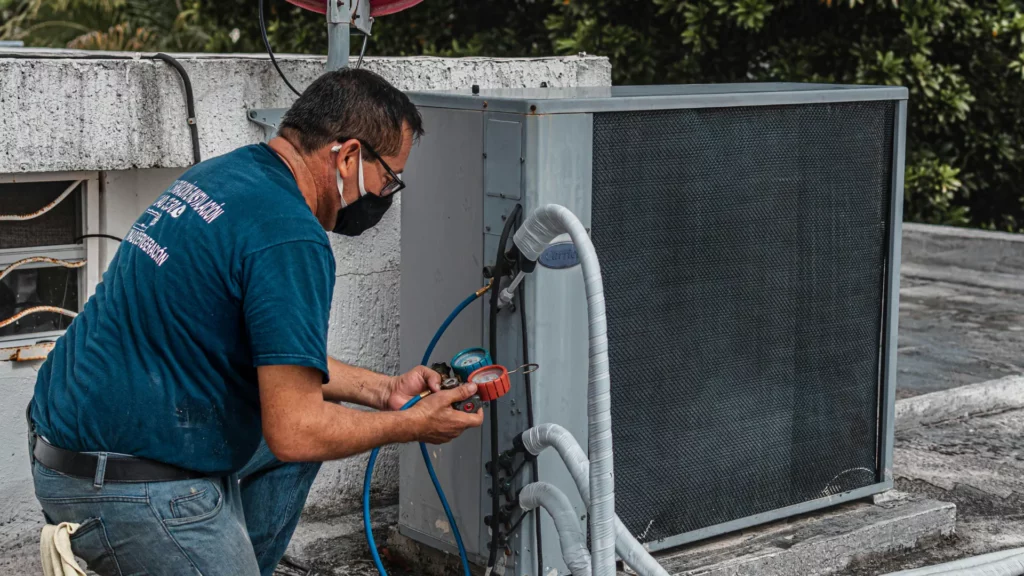
If that number exceeds $5,000, replacement is almost always the smarter long-term investment. A 15-year-old system facing a $400 repair lands at $6,000 on the scale, a clear signal to stop patching and start planning. Continuing to fund colorado springs hvac repair on a system past its prime means spending money on diminishing returns while efficiency keeps dropping and breakdown risk keeps climbing.
Reputable colorado springs hvac companies will walk you through this calculation without pressure. At HVAC Authority, it’s a standard part of every service consultation, because the right answer for your home should be based on numbers, not sales incentives.
What Is the Most Reliable HVAC Company?
Start with the basics: any company you invite into your home should be licensed, bonded, and insured. In Colorado, HVAC contractors are required to hold state licenses, and verifying that credential takes less than five minutes. Beyond licensing, look for brand certifications from manufacturers like Lennox, Carrier, or Trane. Designations like Lennox Premier Dealer or Carrier Authorized Dealer indicate that technicians have completed manufacturer-specific training and meet ongoing performance standards, not just a sticker on a van.
Local reputation matters more than marketing. Check Google Business Profile reviews, look for patterns in what customers say about communication and follow-through, and pay attention to how long the company has operated in COLORADO SPRINGS. A firm with a decade of community presence and consistent reviews has earned something a new entrant hasn’t: a track record.
Ask direct questions before committing: Do you provide written estimates? What does your warranty cover? Do you offer maintenance plans? Companies that answer these questions clearly and without hesitation are the ones worth trusting with your heating and cooling colorado springs investment.
This is where local knowledge separates good colorado springs hvac companies from great ones. COLORADO SPRINGS sits above 6,000 feet in elevation, and that altitude changes how HVAC systems perform in ways that matter enormously to long-term efficiency and reliability. Gas furnaces require precise calibration for thinner air. AC units face challenges with refrigerant charge levels, compressor sizing, and airflow calculations that all shift at elevation. A technician without high-altitude experience may install a technically correct system that performs incorrectly for your specific conditions.
Every hvac installation colorado springs project HVAC Authority handles accounts for elevation, seasonal range, and the specific layout of the home, because those variables are non-negotiable here.
Which HVAC System Is the Quietest?
If noise and energy efficiency matter to you, and in most households, they do, focus your search on variable-speed and modulating systems. These units adjust output continuously rather than cycling on and off at full power, which reduces both noise and energy consumption significantly.
The top performers recognized across the hvac colorado springs market for quiet, efficient operation include:
- Lennox SLP series: modulating furnaces rated as low as 50–55 decibels, among the quietest available for residential use
- Carrier Infinity series: variable-speed performance with sound-dampening cabinet design built for exactly this kind of comfort priority
- Trane XC95m and XV95: engineered for durability and low operational noise across Colorado’s full climate range
For open-plan homes or households with light sleepers, the difference between a single-stage system and a variable-speed unit is immediately noticeable from the very first night. HVAC Authority installs all three brands and recommends systems based on your home’s actual needs, not inventory availability or margin preference.
What Is the 2 Foot Rule for HVAC?
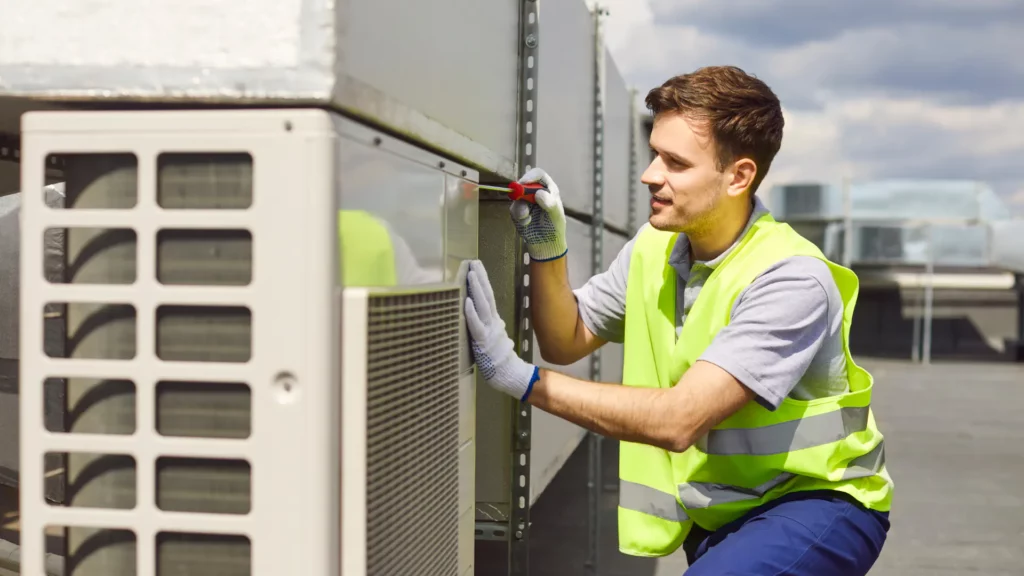
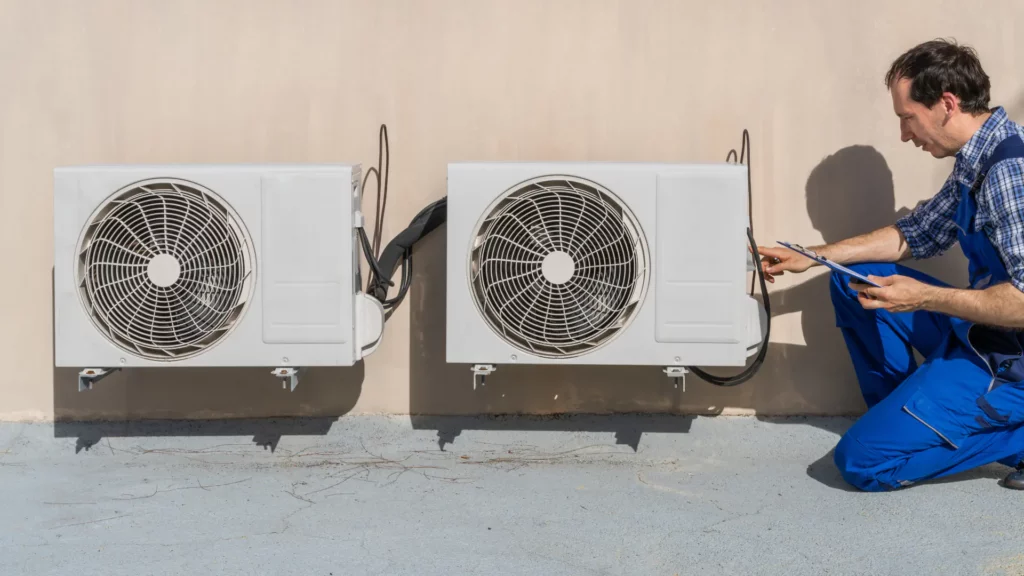
Choosing a great system means nothing if it’s installed poorly. The 2-foot rule is a straightforward installation standard: outdoor AC units require at least two feet of clearance on all sides for adequate airflow and service access. Restricting that space reduces efficiency, accelerates wear, and makes future colorado springs hvac repair work more difficult and expensive than it needs to be.
Indoors, the same principle applies. Air handlers, furnaces, and ductwork connections need adequate clearance for maintenance access, proper airflow, and structural protection. Shortcuts taken during hvac installation colorado springs projects show up months or years later as noise problems, efficiency losses, and premature equipment failures that a little extra space on installation day would have prevented entirely.
At HVAC Authority, installation standards aren’t optional. Every system we install is positioned, connected, and calibrated to manufacturer specifications, because the quality of the installation determines how the system performs for the next 15–20 years. The 2-foot rule isn’t a technicality; it’s the kind of foundational detail that separates a system that thrives from one that merely survives.
What the Right HVAC Company Actually Looks Like
A great hvac colorado springs company doesn’t just show up and swap equipment. It listens. It asks about your home’s layout, your family’s comfort needs, your budget, and your history with the system. It provides written estimates, explains its recommendations in plain language, and follows up after the job is done.
The heating and cooling colorado springs market has no shortage of companies that talk a good game. The ones worth trusting demonstrate their expertise through how they work, the questions they ask, the thoroughness of their assessment, and their willingness to tell you when a repair is the right call instead of pushing for a sale.
HVAC Authority has built its reputation in COLORADO SPRINGS on exactly that approach. We’re not the company that sells you the most expensive option available. We’re the company that sells you the right one.
Ready to work with a company you can actually trust?
Contact HVAC Authority for a no-pressure HVAC assessment in COLORADO SPRINGS. Whether you need a system evaluation, a second opinion on a repair quote, or a full hvac installation colorado springs consultation, our team is ready to give you straight answers backed by real local expertise.
Call HVAC Authority, the hvac colorado springs team that puts your comfort and your budget first.